
You notice the little things. A slower start in the morning. A pause before climbing the stairs. A favourite walk that suddenly feels a little too long.
When your dog’s comfort changes, you want to help. Red light therapy is one option attracting interest from owners looking for additional support alongside veterinary care.
But what can it actually offer and where does the evidence stand?
What is red light therapy?
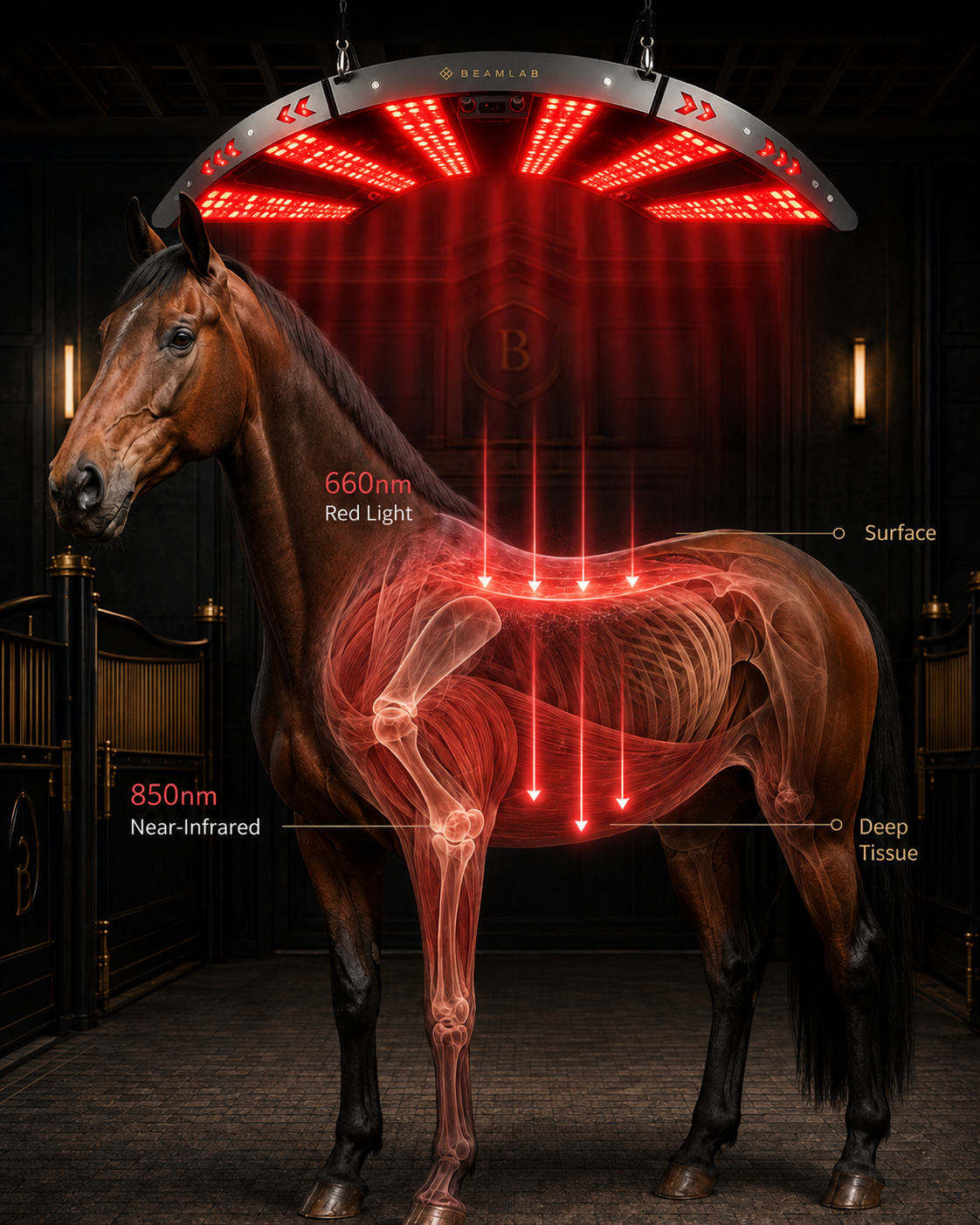
Red light therapy uses specific wavelengths of light, often combining visible red and invisible near-infrared light. The wider scientific term is photobiomodulation, which describes the use of light to influence cellular activity.
Devices can use LEDs or therapeutic lasers. Although both fall within this field, their output, application methods and safety requirements differ. Veterinary laser treatment and a home LED bed should not be treated as interchangeable.
The potential benefits for dogs
Supporting joint comfort
For dogs with osteoarthritis, discomfort can affect much more than their walks. Getting up, finding a comfortable sleeping position and joining in family life can all become harder.
Some veterinary laser studies have reported encouraging results. A small controlled study involving 20 dogs with hip osteoarthritis found improvements in pain scores, function and joint range of motion following a course of treatment.
That makes photobiomodulation a promising option to discuss with your vet. It does not establish that every red light device will produce the same benefits.
Helping dogs move more comfortably
Comfort and movement are closely connected. When moving hurts less, everyday activities may become easier.
A small placebo-controlled trial in dogs with elbow osteoarthritis reported improvements in lameness and pain measures following veterinary photobiomodulation treatment. Some dogs also needed less anti-inflammatory medication under the study’s supervision.
Medication changes must always be managed by your vet. Light therapy should never be a reason to stop prescribed treatment yourself.
Offering an additional rehabilitation option
Photobiomodulation is used within veterinary rehabilitation alongside approaches such as therapeutic exercise, manual therapy and hydrotherapy. It gives the veterinary team another option when building an individual care plan.
However, recovery benefits are not guaranteed. For example, a controlled study of dogs recovering from spinal surgery found no significant improvement in the measured recovery outcomes with the tested light-treatment protocol.
The condition, equipment and treatment plan all matter.
Providing a non-invasive treatment format
Light is applied externally, without an incision or injection. For a suitable dog, this can make it a useful additional option within a broader treatment plan.
The practical experience matters too. A dog who can settle comfortably is easier to supervise than one who feels restrained or unsettled. Sessions should always be introduced gradually and stopped if your dog shows discomfort.
What about home red light devices?
Much of the canine clinical research involves veterinary lasers with specific treatment doses. Those findings cannot automatically be transferred to every home LED mat, wrap or bed.
Matching a wavelength alone does not establish equivalent performance. Light output, session length, positioning and the amount reaching the intended tissue also affect the treatment.
Before choosing a home device, look for clear specifications and instructions, and ask your vet whether it is appropriate for your dog. Be cautious of products promising guaranteed pain relief, cartilage regrowth or rapid recovery.
Bringing care into a familiar space
At BeamLab, we believe practical design matters.
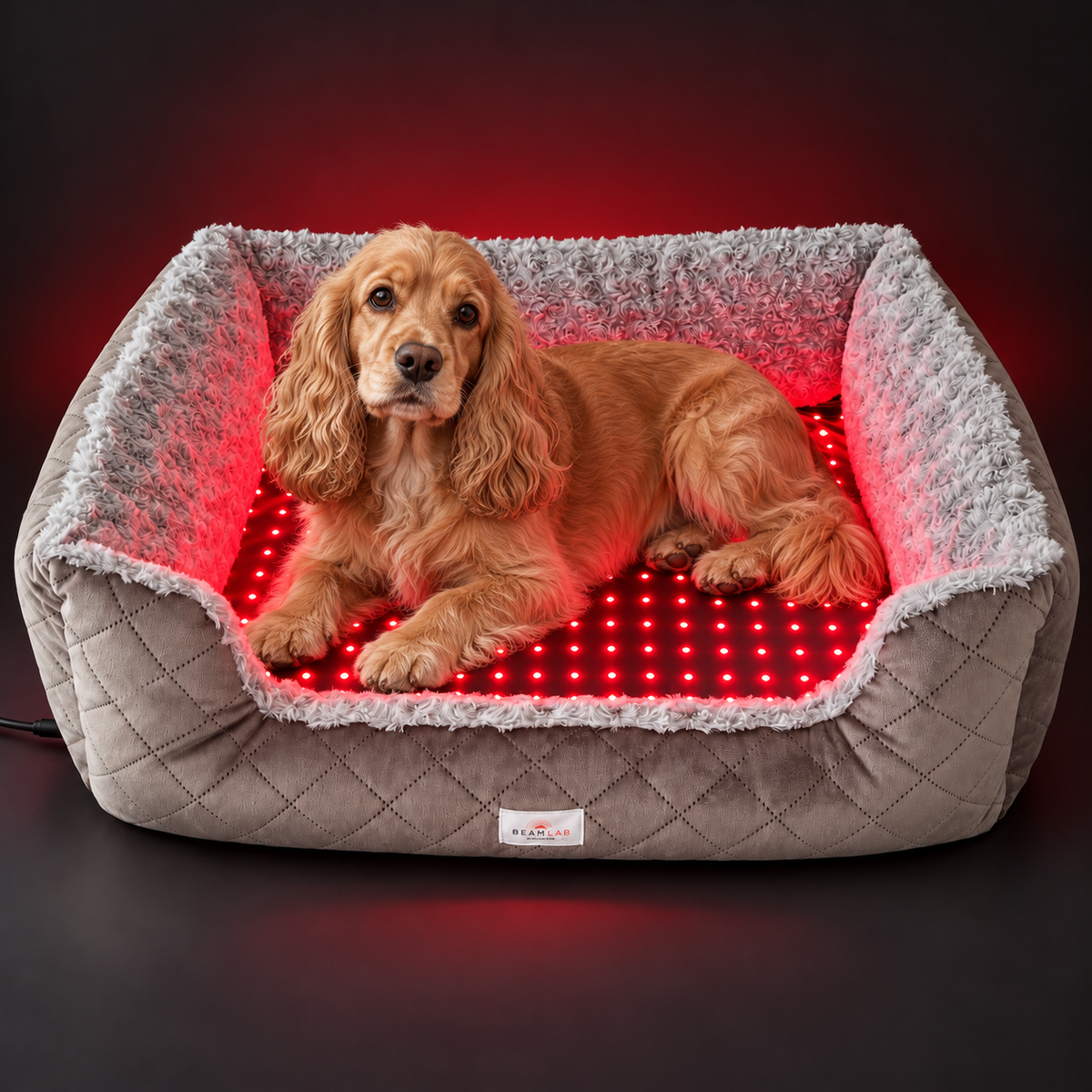
BeamRest combines an everyday dog bed with a full-body light pad beneath a removable centre cushion. The cushion provides a resting surface between sessions; removing it gives access to the pad for use according to the supplied instructions.
Its timer and multiple wavelengths allow sessions to be managed within the product’s guidance. Your dog should remain supervised and free to leave the bed.
This familiar format may make the routine easier for an owner to manage. It does not, by itself, demonstrate a clinical benefit or guarantee a particular result.
Getting started thoughtfully
Before introducing red light therapy:
-
Speak to your vet. New stiffness, limping or reluctance to move needs assessment.
-
Check the exact device. Confirm its intended use, settings and eye-protection requirements.
-
Follow the instructions. Longer sessions are not automatically better.
-
Watch your dog. Stop if they become distressed, uncomfortable or unusually warm.
-
Track everyday changes. Notes about rising, walking and resting can help your vet assess progress.
Keep the foundations of care in place. A suitable weight-management plan, appropriate exercise, comfortable surroundings and prescribed treatment remain important parts of managing chronic pain.
Care built around your dog
Red light therapy deserves a balanced conversation. Some veterinary studies show potential benefits for joint comfort and mobility, while results vary across conditions and treatment methods.
The best starting point is understanding what your dog needs, then choosing suitable care with your vet.
Because their wellbeing is about the everyday moments: getting up to greet you, enjoying their walk and settling comfortably beside you.
Thoughtful care. More comfortable moments. The BeamLab way.

Leave a comment
This site is protected by hCaptcha and the hCaptcha Privacy Policy and Terms of Service apply.