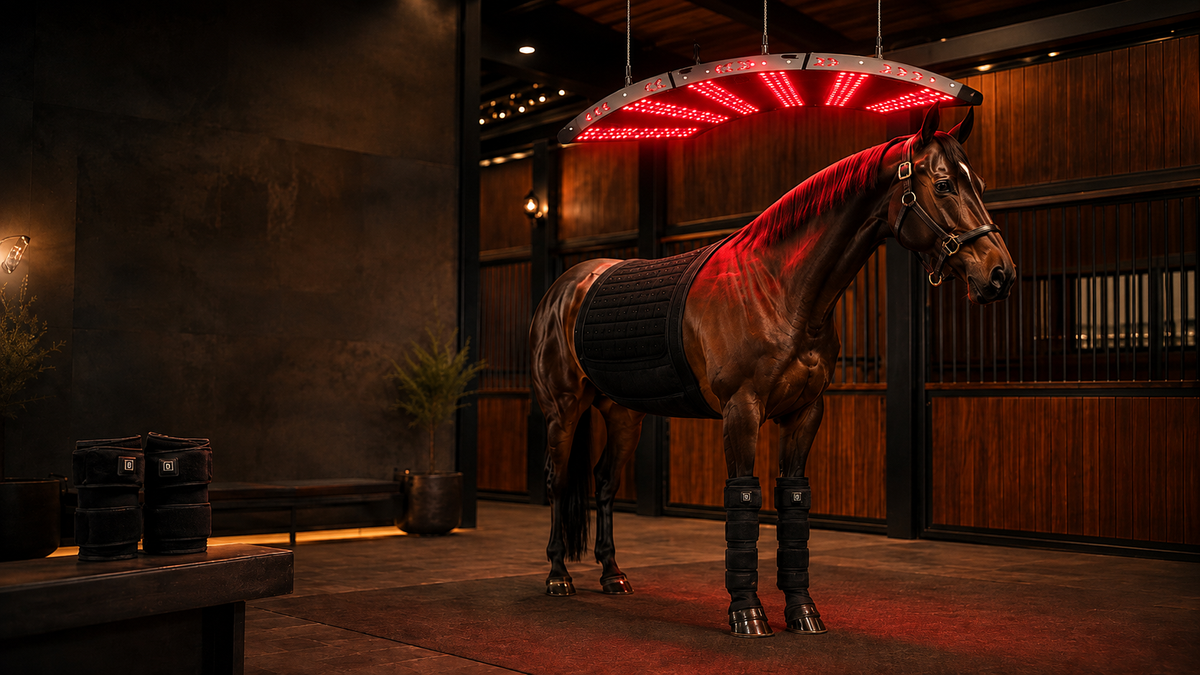
Whether you're caring for a competition horse, an older horse or simply looking for new ways to support your horse's everyday wellbeing, equine red light therapy is becoming an increasingly popular addition to modern horse-care routines.
Also known as photobiomodulation (PBM), light therapy uses specific wavelengths of red and near-infrared light directed towards the body. Veterinary research has investigated photobiomodulation across areas including musculoskeletal conditions, pain, wounds and recovery, although the evidence is still developing and optimal treatment protocols have not yet been firmly established.
So what exactly is equine red light therapy, and why are more riders, owners and equine professionals incorporating it into their routines?
What Is Equine Red Light Therapy?
Red light therapy exposes an area of the horse's body to specific wavelengths of light.
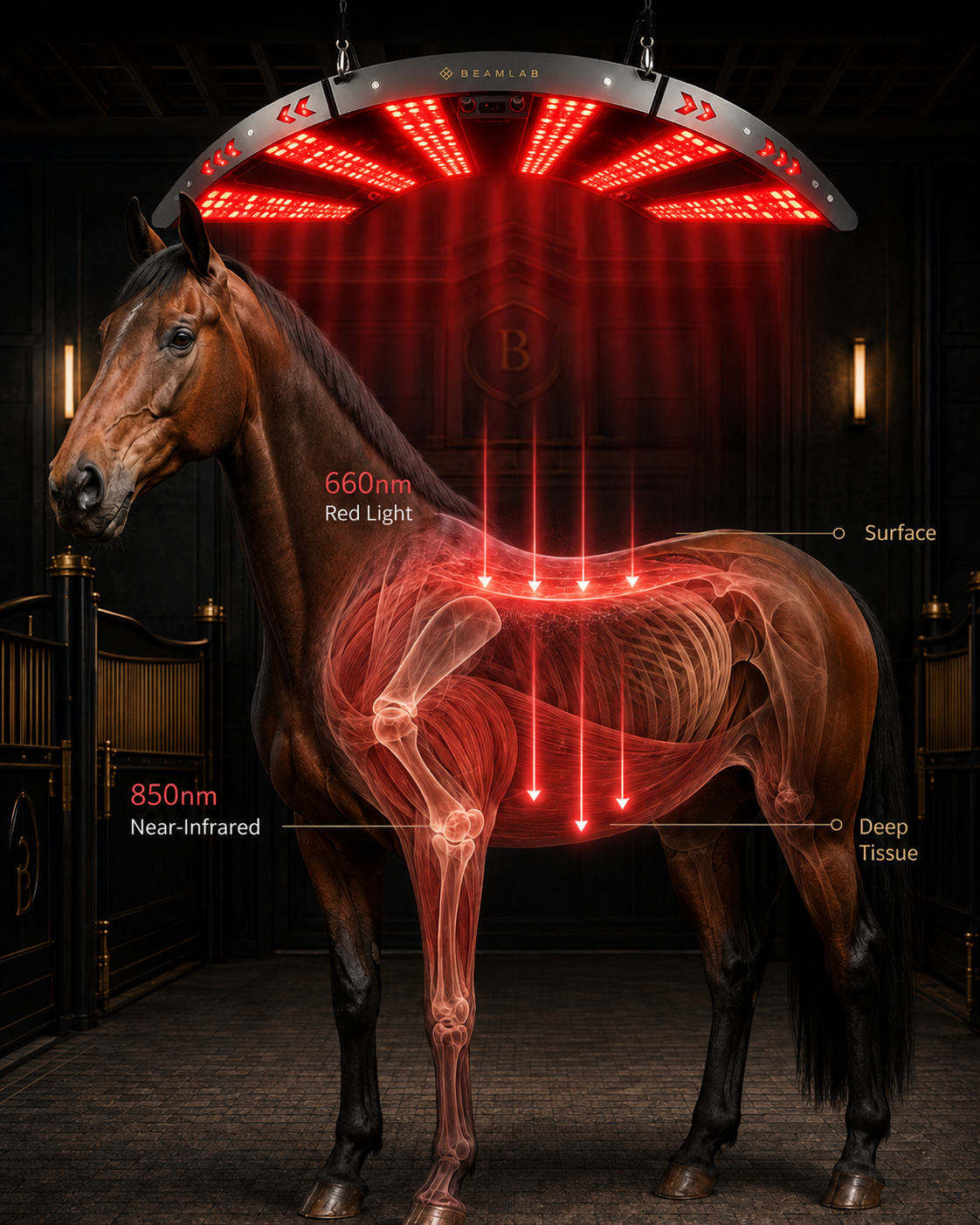
Generally, devices combine two types of light:
Red light works closer to the surface of the body, while near-infrared light can penetrate more deeply into tissues.
This is different from simply placing a bright lamp next to your horse. Photobiomodulation devices are designed to deliver particular wavelengths and doses of light to a targeted area.
One proposed mechanism is that photons interact with light-sensitive components within cells, including mitochondrial pathways involved in cellular energy production and signalling. This is one reason photobiomodulation continues to be researched in both human and veterinary medicine.
Why Do Horse Owners Use Red Light Therapy?
For most owners, red light therapy isn't about replacing conventional care. Instead, it can become another tool within a wider training, recovery and wellness programme.
Common applications include:
- Post-exercise recovery
- Supporting hard-working muscles
- Maintaining mobility
- Supporting older horses
- Pre- and post-competition routines
- Targeting specific areas such as the legs or back
- Complementing veterinary or rehabilitation programmes
Research in horses has produced some interesting results, but it is important not to overstate them. For example, one study examining equine back muscles found changes in muscle firing measurements following photobiomodulation, although it did not demonstrate a significant change in mechanical pain thresholds.
This is a good example of why red light therapy should be viewed as a supportive wellness and recovery technology rather than a guaranteed treatment for a medical condition.
Red Light Therapy for Horse Legs
The lower legs are one of the most practical areas for targeted equine light therapy.
Competition and recreational horses place considerable demands on the structures of their legs through training, jumping, galloping and general movement.
A wrap-style light therapy device allows the LEDs to sit close to the treatment area while providing coverage around the leg.
For owners, this makes therapy boots particularly convenient because they can be incorporated into a horse's normal stable routine.
For example:
After training → cool down → grooming → light therapy session → rest.
Wireless boots can make this even easier because there are no trailing cables around the horse.
What About Older Horses?
Senior horses may be particularly suited to a carefully managed wellness routine incorporating light therapy.
As horses age, maintaining comfortable movement, appropriate exercise and good recovery habits becomes increasingly important.
A non-invasive light therapy session can be incorporated alongside:
- Appropriate exercise
- Good nutrition
- Regular farrier care
- Veterinary assessment
- Physiotherapy
- Massage
- Suitable turnout
- Weight management
For senior horses, consistency is often more valuable than occasional intensive interventions.
A short, relaxing therapy session can therefore become part of their normal management routine.
Red Light Therapy for Competition Horses
Performance horses experience repeated physical demands.
Whether your horse competes in:
- Dressage
- Eventing
- Showjumping
- Racing
- Endurance
- Polo
- Showing
recovery management can be just as important as training itself.
Photobiomodulation has been studied in exercised horses. One small study involving 12 Quarter Horses examined low-level laser therapy before and after exercise and found physiological differences between groups, although the small sample size means the findings should be interpreted cautiously.
For riders, the practical attraction is straightforward: light therapy can be delivered without adding another strenuous element to the horse's recovery routine.
Red Light vs Near-Infrared Light
Many equine devices combine both technologies.
Red Light
Common wavelengths sit within the visible red spectrum.
Red light is generally used when targeting areas closer to the skin and superficial tissues.
Near-Infrared Light
Near-infrared wavelengths are invisible to the human eye and can penetrate more deeply than visible red light.
This makes combining the two attractive for equine devices designed to cover muscles, joints and surrounding tissues.
A combination such as 660nm red light and 850nm near-infrared light, for example, allows one device to provide both visible red and deeper-reaching near-infrared wavelengths.
Does Equine Red Light Therapy Really Work?
This deserves a balanced answer.
The science is promising in some areas, but it is not definitive.
A systematic review of veterinary laser and LED therapy found some beneficial results across the published literature but also concluded that study quality was often limited and that results were inconsistent. Researchers highlighted major differences in wavelengths, dosage, treatment frequency and device types as reasons firm clinical recommendations remain difficult.
Not every study produces a positive outcome either.
For example, a controlled study using red and near-infrared LED therapy on experimental wounds in eight horses found no clinically relevant improvement in wound healing compared with untreated wounds.
That's important.
Responsible light therapy brands shouldn't claim that LEDs cure injuries or replace veterinary medicine.
Instead, the strongest positioning is:
Red light therapy is a non-invasive technology that can be incorporated into an overall equine wellness, recovery and rehabilitation programme.
How Often Can You Use Equine Red Light Therapy?
There isn't one scientifically established treatment schedule that applies to every horse, device and condition. Research protocols vary considerably in wavelength, dose, power, frequency and treatment duration.
For that reason, always follow the instructions supplied with your particular device.
The appropriate routine can depend on:
- Device power
- Wavelength
- Distance from the skin
- Treatment area
- Horse
- Intended application
- Frequency of use
More treatment isn't automatically better.
Consistency and appropriate dosing matter.
Making Light Therapy Easy
One of the biggest barriers to any recovery method is inconvenience.
If equipment takes 30 minutes to set up, needs multiple extension leads and requires the horse to remain in an awkward position, owners are less likely to use it consistently.
This is why wearable devices are particularly interesting for equine use.
The BeamLab EquiBeam Leg Pro, for example, combines 660nm red light and 850nm near-infrared light in a cordless equine leg wrap with a built-in rechargeable battery.
Secure the wraps around the horse's legs, switch them on and allow the horse to relax during the session.
It turns light therapy into something that can realistically become part of an everyday stable routine.
Who Could Consider Equine Red Light Therapy?
Light therapy may be worth exploring for owners of:
Performance horses — as part of a structured recovery programme.
Senior horses — to complement routines focused on mobility and comfortable activity.
Leisure horses — for general wellness and recovery following exercise.
Horses undergoing rehabilitation — where light therapy has been discussed with the veterinarian or rehabilitation professional overseeing the horse.
One Important Rule: Don't Ignore the Vet
Red light therapy shouldn't be used to mask symptoms or delay diagnosis.
If your horse develops:
- Sudden lameness
- Significant swelling
- Heat
- An open wound
- Severe sensitivity
- Reduced performance
- Behavioural changes
- Persistent stiffness
seek veterinary advice.
A light therapy device should complement appropriate veterinary care—not replace it.
Bringing Modern Recovery Into the Stable
Equine care has evolved enormously.
Owners now have access to technologies that were once largely restricted to specialist rehabilitation environments.
Red and near-infrared light therapy is part of that movement.
The attraction is easy to understand: non-invasive, convenient and simple to incorporate into an existing horse-care routine.
The scientific evidence in horses is still developing, and claims should therefore remain realistic. But for owners looking to build a more comprehensive approach to recovery, mobility and everyday equine wellness, photobiomodulation is a technology worth understanding.
Discover BeamLab Equine Light Therapy
From targeted wireless leg wraps to larger-area equine light therapy systems, BeamLab equine products are designed to make premium red and near-infrared light therapy practical for everyday horse owners and professionals.
Support their movement. Support their recovery. Keep them doing what they love.

Leave a comment
This site is protected by hCaptcha and the hCaptcha Privacy Policy and Terms of Service apply.